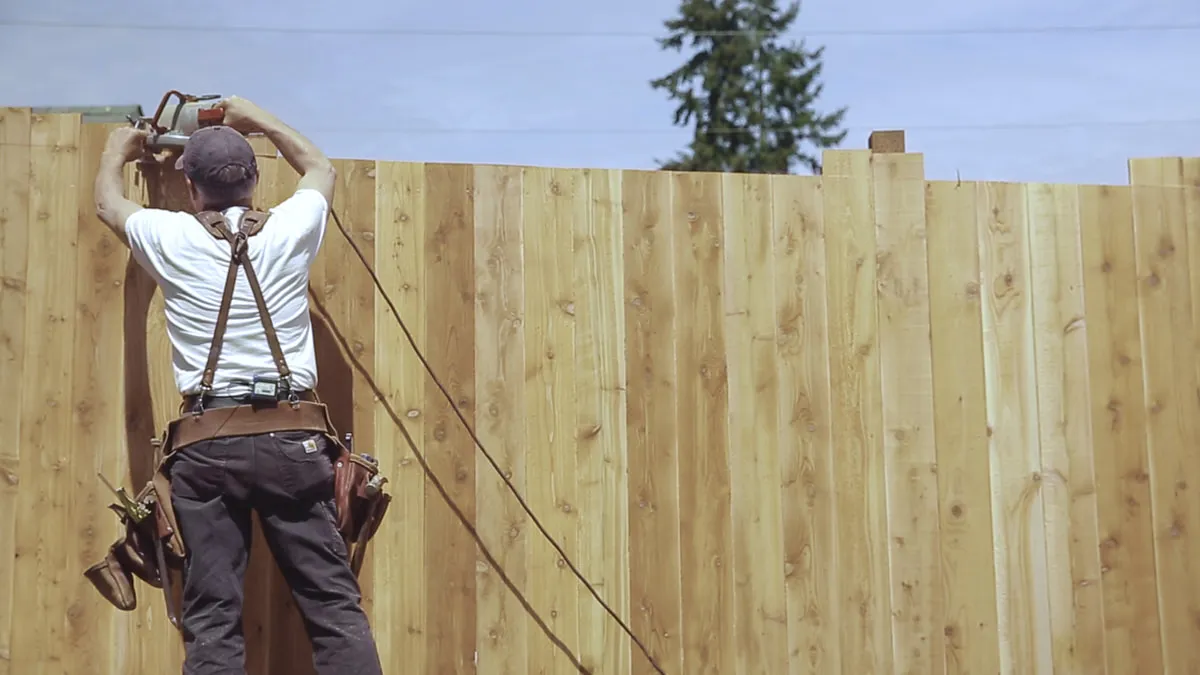
Wood costs less up front: $20 to $50 per foot installed, against $30 to $60 for vinyl in the national figures. Vinyl then needs almost nothing, while wood needs sealing and occasional repairs. Over many years the gap narrows.
Price ranges are national figures published by HomeGuide for 2026, not our own quotes. New York City labor, material prices and the conditions on your lot move the real number up or down. Last checked October 2026.
| Wood | Vinyl | |
|---|---|---|
| Installed cost per foot | $20 to $50 | $30 to $60 |
| Upkeep | Seal or stain every few years | Wash it |
| Weak point | Rot at the ground and in shade | Can crack from an impact in deep cold |
| Repairs | Board by board | Usually a full panel |
| Look | Natural, any stain color | Even, limited colors |
Cedar or pressure-treated pine?
Cedar looks better and stays straighter. It resists rot and insects naturally and does not twist much as it dries. Pressure-treated pine is cheaper and is the right wood for posts, because posts sit in the ground. Cedar boards on treated posts is a common mix here.
Which fence lasts longest in freeze and thaw?
Aluminum and vinyl, since neither rots or rusts. With any material, the posts decide which fence lasts longest, because frost works on the footings every winter. Near Jamaica Bay and the north shore, add salt air: vinyl and aluminum shrug it off, while plain steel needs a galvanized or coated finish.
What type of fence is best for my yard?
| You want | Good choices | Keep in mind |
|---|---|---|
| Privacy | 6-foot cedar or vinyl | Solid panels catch wind; front yards are limited to 4 feet |
| A large dog | 5 or 6 foot wood, vinyl or chain link | Close the gap at the bottom |
| Small children | Any solid fence with a self-latching gate | Set the latch high |
| A pool | Aluminum or vinyl built to the city pool rules | 48-inch minimum barrier height |
| Lowest cost | Chain link | Slats add privacy |
| Low upkeep | Vinyl or aluminum | Higher first cost |
| A front court on a row house block | Low steel or aluminum with a gate | Check for a historic district |
| A yard near salt water | Vinyl, aluminum or coated chain link | Use stainless or galvanized hardware |
If you are not sure which of these is best for my yard, as customers often put it, we look at the lot and tell you plainly.
Is aluminum fencing strong enough for a large dog?
For most dogs, yes. The questions are height and picket spacing, not strength. A dog that jumps needs more height. A small dog needs closer pickets near the ground.
We have a large dog, want privacy and do not want to spend a fortune. What makes sense?
A basic 6-foot board fence in pressure-treated pine. It blocks the view, holds most large dogs and costs less than other solid fences. To cut the bill further, use the solid fence only on the sides that face neighbors or the street and chain link where nobody looks.
My neighbor has wood and wants me to match it so we can split the cost. I want vinyl.
A shared stretch can only be one fence, so you both have to agree on its material and put the split in writing. The other sides of your yard are your choice. If there is no agreement, you can build your own fence fully on your side of the line and pay for all of it.
Will the new fence look the same on my neighbor's side?
Some styles do. Shadowbox, board-on-board and most vinyl panels look finished from both sides. An ordinary stockade or picket fence has a rail side and a face side. Settle with your neighbor which way it faces before we build.
We have to see the yard to give you a real number. The estimate is free and comes in writing. Call (718) 550-3411 or text us a photo of the fence line.