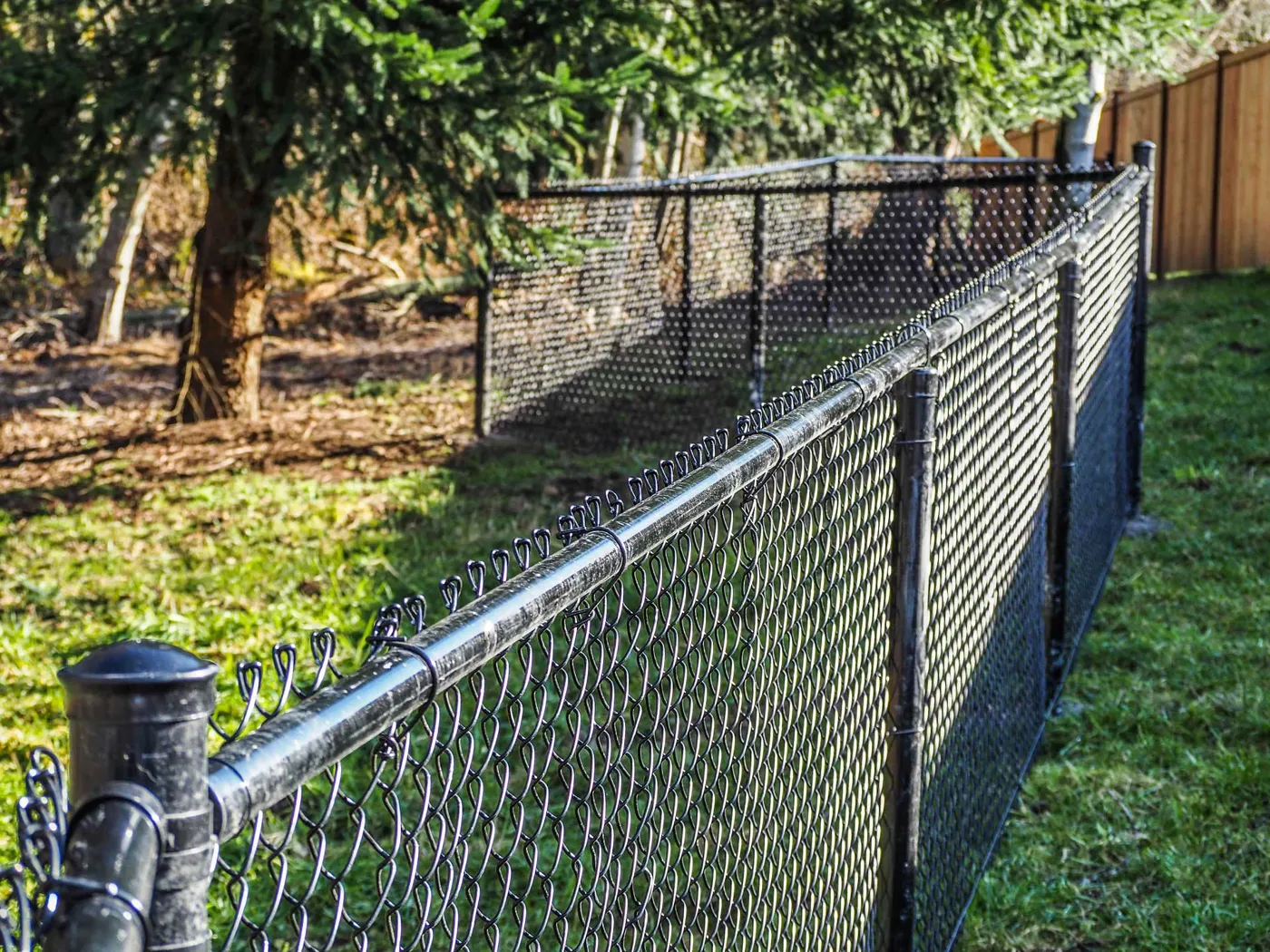
For most houses, no. The NYC Department of Buildings does not require a permit for a fence 6 feet or less at a one- or two-family home. Taller fences, landmark properties and pools are different. Queens is part of New York City, so the same rules apply in every neighborhood we serve.
Do I need a permit to build or replace a fence?
Not for a fence 6 feet or less at a one- or two-family house. The Department of Buildings lists that as work exempt from a permit (1 RCNY 101-14), with the height measured from the higher of the two grades beside the fence. A like-for-like replacement at the same height falls under the same rule. A fence over 6 feet needs a permit application. The zoning limits below still apply even when no permit is needed.
How tall can my fence be? Is 6 feet allowed?
Yes in side and rear yards. In residence districts the city limits fences to 6 feet, and to 4 feet in a front yard (Zoning Resolution section 23-312). A corner lot gets one exception: the fence may be 6 feet in the part of one front yard between a side lot line and the line of the house wall facing it. Outside residence districts the Building Code allows up to 10 feet (section 3112.1). Separately, New York law lets a neighbor ask a court to declare a fence over 10 feet a private nuisance if it was put up to block light or air (Real Property Actions and Proceedings Law section 843).
How close to the property line can I build? Do I need a survey?
You may build up to your line, but the whole fence, footings included, has to stay on your side. It cannot stand on the public sidewalk. The Department of Buildings advises owners to hire a licensed land surveyor to confirm the location. Do that when the boundary is not marked, when houses share a driveway, or when you and the neighbor disagree. Get the plot plan or a survey before any post goes in.
I live in a historic district. What can I build?
Ask the Landmarks Preservation Commission first. The Department of Buildings says fences on landmark properties need the Commission's approval. Queens has 13 historic districts on the Commission's list, among them Jackson Heights, Sunnyside Gardens, Hunters Point, Addisleigh Park, Douglaston, Fort Totten and four in Ridgewood. Repairing or matching the existing fence is usually the simpler and more affordable route, but the Commission decides, not us.
Can my condo association or HOA restrict my fence?
Yes. A co-op or condo board, a homeowners association or a deed restriction can limit height, material and style beyond what the city requires. Forest Hills Gardens is one example of a private community with its own review. Get the approval on paper before anything is ordered.
We are adding a pool. What fence does code require?
The New York City Building Code requires a barrier around a private pool. Section 3109.5.1 puts the top of the barrier at least 48 inches above grade, measured on the side facing away from the pool, with no more than 2 inches of clearance underneath. Gates have to close and latch on their own. The code also calls for a temporary barrier while an outdoor pool is under construction. The Department of Buildings reviews the pool plans and sets the final details.
The inspector failed my existing fence for the pool. Who brings it up to code?
A fence contractor does. Typical fixes are raising a section that is too low, closing the space under the fence, replacing a gate so it shuts and latches without help, and moving things a child could climb away from the outside. Give us the written objections and we will quote against that list.
My association only allows a 4-foot open fence, but I want privacy. What are my options?
Work inside the rule first. Planting a hedge on your side of a 4-foot open fence is the usual answer. A privacy screen set close to the patio may be allowed where a boundary fence is not. Otherwise, apply to the board in writing for an exception. Check your survey for easements too, since a utility or drainage easement can limit where any fence may stand.
Who calls 811 before digging, me or the contractor?
Whoever is digging. In Queens the call goes to New York 811, the one-call center for the five boroughs and Long Island. It asks for notice at least 2 working days and no more than 10 working days before the work starts. The utilities then mark the lines they own. When we install the fence, we place the request. Pipes and wires you put in yourself, such as sprinkler lines or power to a garage, are not marked by the utilities, so show us where they run.
My contractor wants to skip the permit and reuse the old holes. What is the risk?
It falls on you as the owner. If the fence is over 6 feet, on a landmark property or part of a pool barrier, and nobody got the approval, the city can issue a violation and you may have to change or remove the fence. Reusing old holes also repeats whatever depth the old posts had. A contractor who wants to skip the permit may be skipping the license too, so check that first.
The city says my existing fence breaks the current rules. Can I just repair it?
Ask the Department of Buildings before spending anything. Whether an older fence can be repaired as it stands or has to be brought down to today's height is the city's decision. If you received a violation, the notice says what must be corrected, and we can price the work to match it.
We have to see the yard to give you a real number. The estimate is free and comes in writing. Call (718) 550-3411 or text us a photo of the fence line.